
ChatGPT Ads for Travel Agencies: The 2026 GCC Playbook
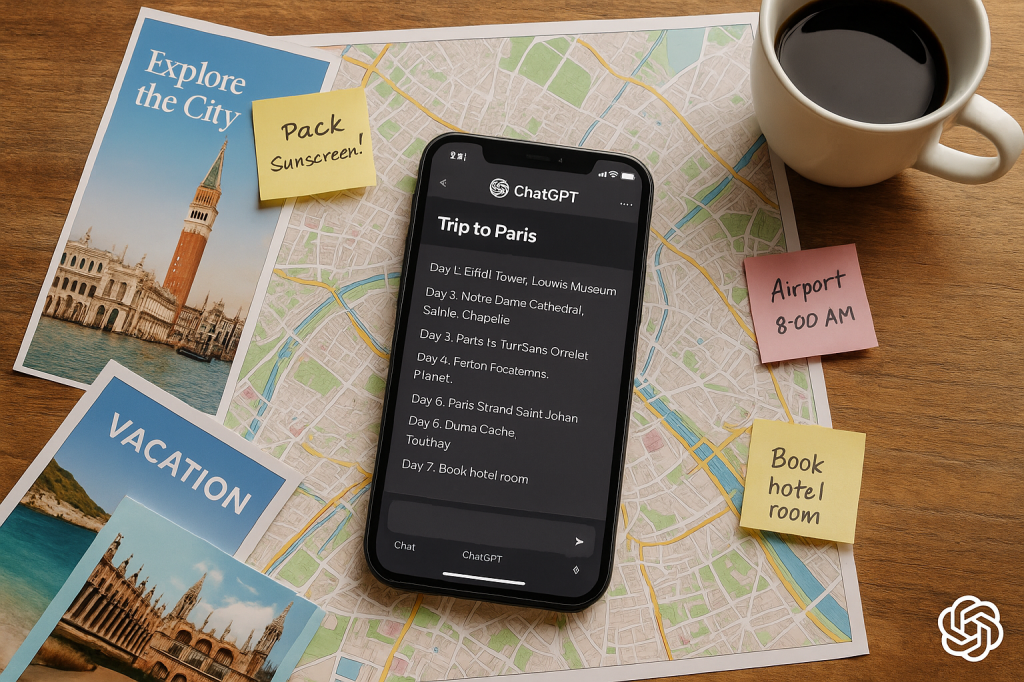
ChatGPT ads for travel agencies are sponsored placements that appear beneath ChatGPT’s answers when a traveller or corporate buyer researches trips, destinations, or travel services inside the chat window. They are matched to the context of the conversation rather than to a keyword list, which makes them a fundamentally new — and unusually high-intent — channel for travel brands. For GCC agencies, the strategic window is opening now, before the channel is priced at maturity.
Skybook Digital, the digital marketing consultancy division of Nucore Software Solutions, works with travel agencies, OTAs, DMCs, and hotel groups across 21 countries. This guide explains what ChatGPT advertising is, where it stands in mid-2026, how it compares to Google and Meta, and exactly how a travel agency in Saudi Arabia, the UAE, or the wider GCC should prepare.
Definition: What Are ChatGPT Ads?
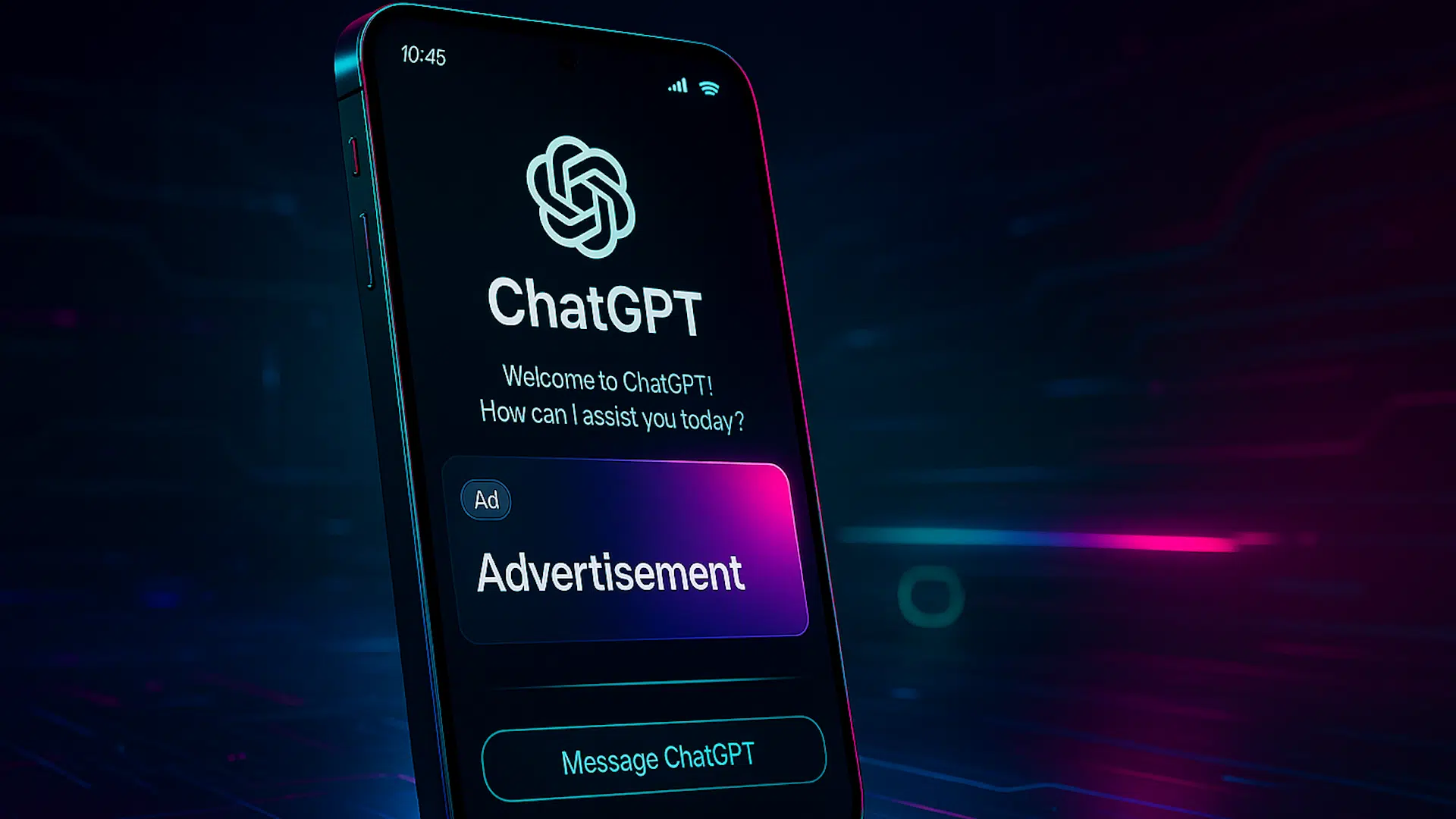
ChatGPT ads are clearly labelled sponsored cards shown below ChatGPT's organic response. Launched by OpenAI in February 2026, they use conversational context — not keywords — to serve a headline, short description, image, and link, without altering the assistant's actual answer.
Why ChatGPT Ads Matter for Travel Brands in 2026
The travel research journey has quietly moved into the chat window. When a buyer plans a family trip, compares Umrah packages, or scopes a corporate travel programme, a growing share of that discovery now happens inside an AI assistant instead of a search results page. For travel agencies, that shift changes where a brand needs to be visible — and where it needs to be paying for placement.
The format: a sponsored card, not a banner
A ChatGPT ad renders as a sponsored card directly under the model’s answer. It carries an advertiser name, a favicon, a short headline, a brief description, a square image, and a link to a destination page — and it is explicitly marked as sponsored. Crucially, the ad never interrupts or rewrites the answer itself. OpenAI has committed to answer independence, conversation privacy, and filtering ads out of sensitive contexts, which keeps the format closer to a helpful recommendation than a disruptive banner.
Contextual intent, not keywords
Unlike Google’s keyword auction, ChatGPT matches ads to the meaning of the ongoing conversation, including relevant chat history and prior ad interactions. A user working through a multi-turn planning session — ‘best time to visit the Maldives’, then ‘family-friendly resorts’, then ‘how to book’ — is expressing far richer intent than a single keyword can capture. That is the middle-of-funnel research moment travel agencies have always struggled to reach at scale.
Why travel is a named commercial category
This is not a fringe use case. OpenAI’s own data indicates roughly 20% of ChatGPT conversations carry shopping or commercial intent, and travel is one of the categories the company names directly, alongside retail, home, beauty, and auto. With ChatGPT reaching around 900 million weekly active users, even a fraction of travel-intent conversations represents a substantial, previously unreachable demand pool for specialist agencies.
Where ChatGPT Ads Stand Right Now — And the Delicate GCC Timing
Timing is the whole game with an emerging channel, and the GCC picture has some specific nuances that a generic agency will miss.
The rollout so far
OpenAI began testing sponsored placements on 9 February 2026 for Free and lower-tier users in the United States, then expanded quickly — into Canada, Australia, New Zealand, and the United Kingdom, with further markets including Japan, South Korea, Brazil, and Mexico. A fully self-serve Ads Manager has since opened, OpenAI has publicly positioned itself as an advertising business, and it has signalled ad revenue ambitions in the billions for 2026. In short: the channel moved from pilot to permanent in a single year.
The GCC and MENA position
As of mid-2026, ChatGPT ads are not yet available through self-serve in the GCC; a Middle East rollout is widely expected in the second half of 2026, with no official date confirmed. Importantly, OpenAI has already rolled out the lower-cost ChatGPT Go tier across the MENA region — and Go users are in scope to see ads once the channel activates locally. So the regional audience is being assembled ahead of the ad inventory going live.
The UAE 'free Plus' paradox
The UAE adds a wrinkle. Under a national AI infrastructure partnership with OpenAI, many UAE residents receive free ChatGPT Plus — and Plus subscribers do not see ads at all. The same exemption applies globally to Plus, Pro, Business, Enterprise, and Education users, and to accounts identified as under 18. The practical takeaway for GCC travel brands: the reachable ad audience is narrower than the headline user numbers suggest, and it skews toward Free and Go users. Audience sizing, not hype, should drive budget decisions.
ChatGPT Ads vs Google and Meta: A Travel Agency Comparison
ChatGPT advertising does not replace existing channels — it occupies a distinct point in the funnel. The table below frames the trade-offs for a travel agency planning its 2026 media mix.
| Dimension | ChatGPT Ads | Google Search Ads | Meta Ads |
| User mindset | Active, multi-turn research and decision moment | Declared keyword intent | Passive browsing; interruption |
| Targeting basis | Conversational context + chat history | Keywords | Interests, demographics, behaviour |
| Ad placement | Sponsored card below the AI answer | Text ad within results | In-feed image or video |
| Early CPC (indicative) | ~$3–6 e-commerce; ~$8–15 competitive B2B | Highly competitive in travel | Lower CPC, lower intent |
| GCC availability | Not yet self-serve; H2 2026 expected | Fully available | Fully available |
| Best used for | Middle-funnel capture + reinforcing AI citations | Bottom-funnel conversion | Awareness and retargeting |
The strategic insight most agencies miss: ChatGPT paid and organic visibility are one system. Your ad appears under the assistant’s own answer. If ChatGPT already recommends your agency organically, the sponsored card reinforces a trusted recommendation and you own the screen twice. If the model has never heard of your brand, the ad reads as an intrusion and gets dismissed. This is why generative engine optimization is the groundwork for paid success, not a separate project.
How to Prepare Your Travel Agency for ChatGPT Ads: Step by Step
Because GCC self-serve access is still pending, the winning move is to build the foundations now so that campaigns can launch the day inventory opens locally. Skybook Digital recommends this sequence:
- 01. Build your GEO foundation. Publish answer-first content, structured data, and third-party citations so ChatGPT can recommend your agency organically. This is what makes a future paid card land as reinforcement rather than intrusion.
- 02. Map high-intent travel conversations. Identify the research moments your buyers have — Umrah and Hajj packages, corporate travel programmes, GCC destination planning — and the questions that precede a booking decision.
- 03. Prepare tight creative. ChatGPT ad copy is compact: a very short headline and a brief description with a 1×1 square image. Draft Arabic and English variants now so nothing is rushed at launch.
- 04. Sort out access. Until GCC self-serve opens, campaigns can only run through a US-registered entity or a partner able to operate the account. Decide your route to market early.
- 05. Set up measurement. Plan conversion tracking (OpenAI provides a first-party pixel and server-side attribution) so you can prove ROI from the first campaign rather than retrofitting it later.
- 06. Integrate, don’t isolate. Treat SEO, AEO, GEO, and paid AI as one workstream. Brands that silo them will pay a premium to stitch them together after the fact.
ChatGPT Ads in the GCC: Regional Considerations
Arabic-first, not Arabic-also
Arabic-language research represents a significant and growing share of AI conversations across Saudi Arabia, the UAE, and Qatar. A ChatGPT ad strategy built only in English concedes the Arabic-intent audience before the auction even begins. Creative, landing pages, and the organic content underneath should all be genuinely bilingual.
Align to the GCC calendar
Travel demand in the region is shaped by Ramadan, Eid Al Fitr, Eid Al Adha, Hajj and Umrah seasons, and national days. Each creates distinct buyer behaviour and a distinct research spike inside AI assistants. Campaign readiness should be timed to those windows, not to a generic global calendar.
Vision 2030 tailwinds
Saudi Arabia’s Vision 2030 continues to expand the Kingdom’s travel and tourism sector, with ambitious national visitor targets. The agencies that build AI-channel visibility now — organic and paid — are positioning for a market that is growing structurally, not cyclically.
Frequently Asked Questions
Q1: How do ChatGPT ads work for a travel agency?
ChatGPT ads appear as a labelled sponsored card beneath the assistant’s answer when a user’s conversation shows relevant travel intent. They are matched to the context of the discussion rather than a keyword bid, and they include a short headline, description, image, and link. The ad never changes the AI’s actual answer — it sits alongside it as a recommendation the user can choose to click.
Q2: Are ChatGPT ads available in the GCC yet?
Not through self-serve as of mid-2026. OpenAI launched ads in the US in February 2026 and expanded to several markets, with a Middle East rollout widely expected in the second half of 2026 but not officially dated. The ChatGPT Go tier is already live across MENA, so the regional audience that will see ads is being built ahead of the ad inventory activating locally.
Q3: Can a UAE or Saudi travel agency advertise on ChatGPT right now?
Only indirectly. Until GCC self-serve access opens, campaigns generally need to run through a US-registered entity or a partner able to operate a US ad account, with strategy and reporting handled regionally. A further nuance: many UAE residents receive free ChatGPT Plus, and Plus users see no ads, so the reachable local audience skews toward Free and Go tiers.
Q4: How much do ChatGPT ads cost?
Pricing is still settling. Early advertisers have reported cost-per-click roughly in the $3–6 range for e-commerce categories and higher — around $8–15 — for competitive B2B. OpenAI uses a relevance-weighted auction, so a well-targeted, high-quality ad on a modest bid can outperform a weak ad with a larger budget. Expect costs to rise as more advertisers enter and the channel matures.
Q5: How are ChatGPT ads different from Google Ads for travel?
The core difference is user mindset. Google captures declared intent at the keyword level, usually near the point of action. ChatGPT reaches users mid-research, during multi-turn conversations where intent is richer but the decision is not yet made. For travel agencies, that makes ChatGPT strong for influencing consideration and reinforcing organic AI recommendations, while Google remains effective for bottom-funnel capture.
Q6: Do I need SEO or GEO before running ChatGPT ads?
Strongly recommended. A ChatGPT ad sits under the assistant’s own answer, so if the model already recommends your agency organically, the paid card reinforces a trusted result. If your brand is unknown to the model, the ad is far more likely to be dismissed. Generative engine optimization — answer-first content, structured data, and credible citations — is the groundwork that makes paid placements perform.
Q7: Will ChatGPT ads work for Arabic-speaking travel audiences?
They can, provided the strategy is built Arabic-first. Arabic-language research is a large and growing share of AI conversations in Saudi Arabia, the UAE, and Qatar. Effective campaigns need Arabic creative, Arabic landing pages, and Arabic organic content underneath — not a translated afterthought. Aligning campaign timing to the GCC cultural calendar further improves relevance and performance.
Q8: What should my travel agency do today if the GCC rollout is months away?
Build the foundations now. Strengthen your generative engine optimization so ChatGPT recommends you organically, map the high-intent travel conversations your buyers have, prepare bilingual creative, decide your route to account access, and set up conversion tracking. Agencies that prepare during the pre-launch window will run profitable campaigns on day one, while competitors are still waiting for an announcement.
Ready to Win the AI Advertising Channel Before Your Competitors?
For travel businesses in Saudi Arabia, the UAE, Qatar, and Oman, Skybook Digital provides culturally aware, Arabic-capable digital marketing backed by GCC market expertise. We build the generative engine optimization foundation, prepare your ChatGPT ad strategy, and position your brand to launch the moment the channel opens regionally. Reach out to discuss your digital growth objectives at info@skybookdigital.com or visit skybookdigital.com.
Related Services from Skybook Digital
- SEO for Travel Agencies — organic visibility across Google and AI answer engines
- AI Video Production for Travel Companies — creative built for AI-native placements
- Social Media Management for Travel Brands — bilingual B2B reach and brand trust
- Travel Agency Website Development — conversion-ready landing pages for paid AI traffic