

Website Trust Signals That Build Credibility
Every website wants to earn people’s trust. When someone visits your website, they quickly decide if it looks safe, reliable and worth staying on. That’s why building trust is important for every online business. If you run an e-commerce store, a travel agency, a SaaS platform, or a local business, visitors decide within seconds if your site is credible enough to continue browsing. Search engines make similar judgments before ranking pages.
This is where website trust signals become essential. They show visitors that your website is safe, genuine, and professionally maintained, making them more likely to stay, explore your pages, and take action. Strong credibility signals improve rankings, increase engagement, and encourage conversions.
Why Online Credibility Matters More Than Ever
Users are more careful about where they spend their time and share their information. Before making a purchase or submitting a contact form, they look for signs that a website is genuine, secure, and trustworthy.
A slow-loading site, outdated design, missing contact details, or poor reviews can reduce confidence. On the other hand, strong website trust signals show visitors that your business is authentic and reliable. Search engines also reward credible online platforms because they provide a better user experience.
Building credibility is no longer just about rankings; it’s about creating confidence for both users and search engines.
Understanding Website Trust Signals
Website trust signals are features that help prove your business is legitimate, secure, and valuable. They improve customer confidence while supporting better SEO performance.
Some important credibility signals include HTTPS security, customer reviews, accurate business information, original content, author profiles, privacy policies, secure payment methods, and quality backlinks from trusted sources.
These elements work together to strengthen your online reputation and improve user experience.
How Spam Score, DA, and PA Influence Credibility
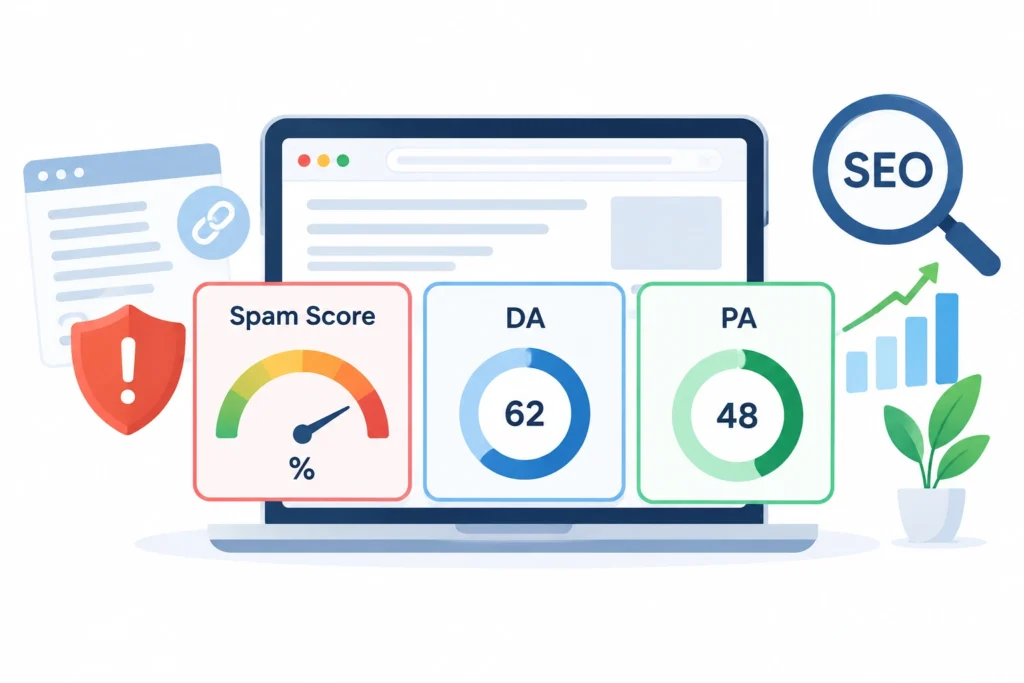
Spam Score, Domain Authority (DA), and Page Authority (PA) are important indicators that help evaluate a website’s credibility and trustworthiness. A high Spam Score may signal that a website has low-quality backlinks or practices that could negatively affect its reputation. In contrast, a higher DA suggests that a website has built strong authority through quality content and trustworthy backlinks, making it more likely to rank well in search results. PA measures the ranking strength of an individual page rather than the entire website.
When users, search engines, and potential customers assess a
, these metrics can provide valuable insights into its overall quality. A website with a low Spam Score and strong DA and PA scores is generally viewed as more reliable, authoritative, and trustworthy. While these metrics are not direct ranking factors, they are useful benchmarks for monitoring website health, backlink quality, and online credibility.
The Signals Search Engines Look for Before Ranking Pages
Search engines prioritize businesses that provide secure, accurate, and helpful information.
1. Secure Browsing Experience
HTTPS encryption protects user data and improves confidence. A secure connection is one of the first website trust factors users notice.
2. Helpful and Original Content
It should answer real questions instead of focusing only on keywords. Updated blogs and informative service pages improve credibility.
3. Genuine Customer Reviews
Real customer reviews provide social proof and help new visitors feel more confident about your business.
4. Transparent Business Information
Displaying accurate contact details, privacy policies, and company information makes your business easier to verify.
5. Quality Backlinks
Backlinks from reputable websites strengthen authority and show search engines that your content is valuable.
Why Mobile-Friendliness, Customer Reviews, Testimonials, and HTTPS Security Matter
Some trust signals have a bigger impact on both user experience and search visibility. Mobile-friendly design, customer reviews, testimonials, and HTTPS security help visitors feel confident while also supporting SEO performance.
Most users browse websites on their phones, so a mobile-friendly site is essential. If pages are difficult to read, load slowly, or don’t fit smaller screens, visitors are more likely to leave. Google also considers mobile usability an important ranking factor because it improves the overall user experience.
2. Customer Reviews
Customer reviews show that real people have used your products or services. Positive reviews help build credibility, increase customer confidence, and can improve local SEO by showing search engines that your business is active and trusted.
3. Testimonials
Testimonials provide proof of customer satisfaction and help potential customers trust your business. Displaying genuine testimonials on service pages or landing pages can improve credibility and encourage more enquiries or conversions.
4. HTTPS Security
HTTPS protects user data by encrypting information shared between the user and your website. A secure connection reassures visitors that their personal information is safe, and Google favors HTTPS-enabled websites over unsecured ones.
How Weak Credibility Affects SEO Performance
Weak credibility can reduce search visibility and user engagement. Broken links, duplicate content, missing SSL certificates, and misleading information often lead to higher bounce rates and fewer conversions.
Improving the website creates a better user experience while supporting stronger SEO performance.
Building Credibility with E-E-A-T Principles
Google evaluates online credibility using E-E-A-T, which stands for Experience, Expertise, Authoritativeness, and Trustworthiness. These principles help search engines identify reliable businesses and valuable content.
Share real experiences, publish expert-written content, earn backlinks from authoritative websites, and keep business information accurate and transparent. Strong E-E-A-T naturally supports website trust signals.
AEO Readiness: Optimizing Content for Answer Engines
Answer Engine Optimization (AEO) helps content appear in featured snippets, voice search, and AI assistants.
To improve AEO, answer common questions clearly, use descriptive headings, write concise explanations, and keep information updated. Reliable website trust signals increase the chances of appearing in AI-generated answers.
GEO Readiness: Preparing Content for AI Search
Generative Engine Optimization (GEO) helps content perform better in AI-powered search experiences such as ChatGPT and Google AI Overviews.
A GEO-ready business should publish original content, provide clear context, maintain consistent business information, and demonstrate credibility through trustworthy content. A strong website helps AI engines recognize reliable information.
Practical Ways to Improve Website Trust Signals
Building credibility requires regular SEO improvements. Audit your online presence for broken links, outdated content, and technical issues. Update blogs, improve readability, remove low-quality backlinks, and maintain accurate business information.
Adding customer testimonials, certifications, FAQs, privacy policies, and secure payment options also strengthens website trust signals and improves user confidence.
Why Credibility Is a Long-Term SEO Investment
Credibility grows through consistent optimization and valuable content. When users feel confident in your brand, they stay longer, engage more, and are more likely to convert.
Search engines recognize these positive signals and reward businesses that consistently provide reliable experiences. Investing in website trust signals supports sustainable SEO growth and stronger online authority.
Conclusion
A trustworthy website is the foundation of a strong online presence and long-term digital growth. Building credibility through secure browsing, quality content, authentic reviews, strong backlinks, and transparent business information helps improve both user confidence and search visibility.
Focusing on website trust signals also prepares your content for modern SEO, AEO, and GEO strategies, making it more visible in traditional search results and AI-powered search experiences.
Skybook Digital helps businesses strengthen online credibility, improve SEO performance, resolve technical issues, and build long-term digital authority through data-driven marketing strategies.